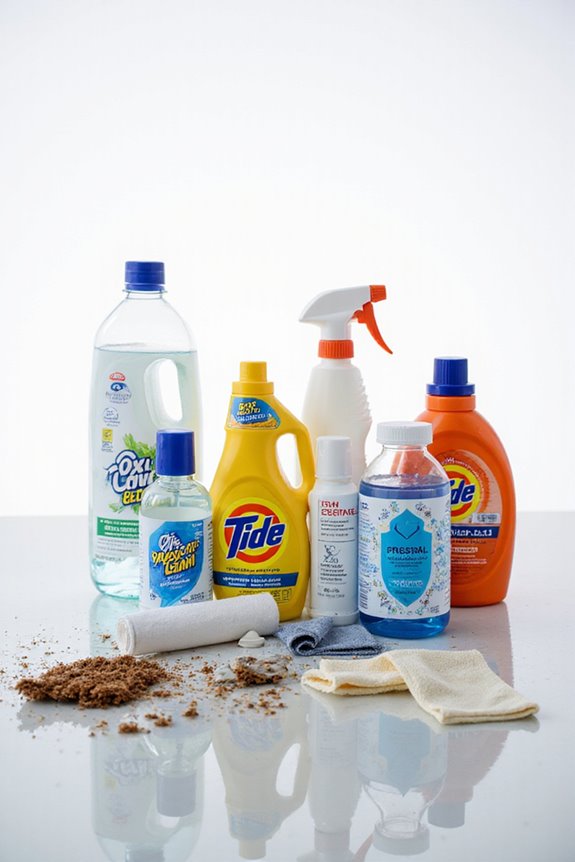

When tackling grass stains, we’ve had great success with enzyme detergents. They break down the proteins in the stains, which can cling tightly to fabric. For maximum effect, we pre-treat with a mix of hydrogen peroxide and baking soda, letting it sit for about 15 minutes. Always rinse in cold water first, and wash on the hottest safe setting for your fabric. Trust us, these methods work wonders—stick around to uncover more insider tips!
Key Takeaways
- Use an enzyme-based stain remover that targets organic stains like grass for effective cleaning results.
- Hydrogen peroxide mixed with baking soda creates a powerful paste to lift stubborn grass stains.
- Pre-treat stains by applying liquid detergent and letting it sit for 10-30 minutes before washing.
- Rinse grass stains with cold water immediately to prevent them from setting deeply into the fabric.
- Always check fabric care labels and use the hottest safe water for the fabric to enhance stain removal.
Understanding Grass Stains
Grass stains can be a real headache, can’t they? Understanding grass stain characteristics is essential if we want to tackle them effectively. These pesky stains are made up of pigments like chlorophyll, which gives grass its green color, as well as proteins and waxes that bind tightly to fabric fibers. When we roll around on the grass, these pigments bind deeply, making removal a challenge. The natural fibers in our clothes, especially cotton, absorb these stains more readily than synthetic materials. Plus, the waxy cuticle on the grass resists water-based cleaners, adding to our frustration. We’ve all had that moment when we thought we got rid of a stain, only to see it reappear later. What a bummer! To combat these stains effectively, it’s important to use detergents formulated with powerful natural enzymes that can break down these complex pigments and proteins.
Key Components of Grass Stains
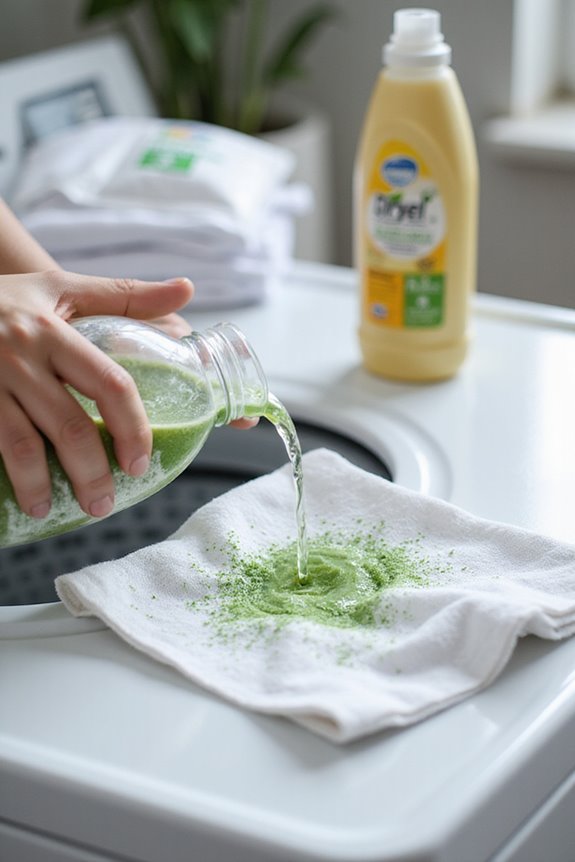
When we think about grass stains, it’s clear they’re made of some pretty stubborn components. Primarily, these stains consist of chlorophyll, proteins, and waxy polymers. Chlorophyll gives grass its vibrant green color, while proteins cling tightly to fabric fibers, making them tough to remove. Through grass pigment analysis, we can see that different grasses produce varying colors due to a mix of green, yellow, and even brown pigments. The structural integrity provided by lignin and cellulose adds to the stain’s persistence. For us, understanding these components helps in selecting the right cleaning agents, as enzymatic breakdown plays a key role in breaking down those pesky proteins. So, let’s gear up and tackle those stains!
Effective Cleaning Agents
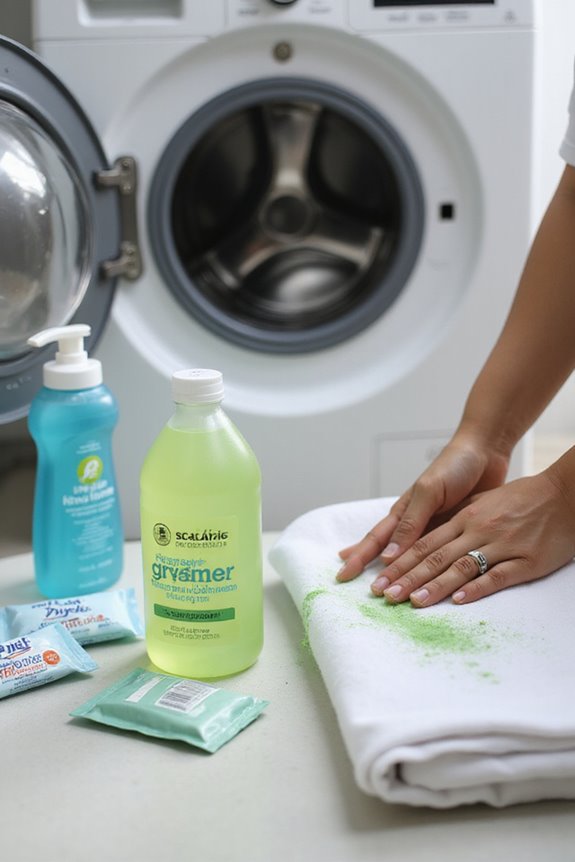
Finding the right cleaning agents for grass stains can feel like a quest for the holy grail of laundry. We’ve all been there, staring at those stubborn green marks. One of our go-to solutions is hydrogen peroxide. When mixed with baking soda, it forms a powerful paste that breaks down the stain pigments. We also love enzyme detergents, as they tackle organic stains like grass effectively. Liquid versions work best because they blend well with the fabric. Remember to apply these agents and let them sit for about 10-30 minutes before scrubbing. Just a heads-up: hydrogen peroxide can cause discoloration on delicate fabrics, so always test it first. Trust us, a little caution goes a long way in laundry adventures! Additionally, using baking soda products can enhance your stain removal efforts for a more thorough clean.
Pre-Treatment Strategies
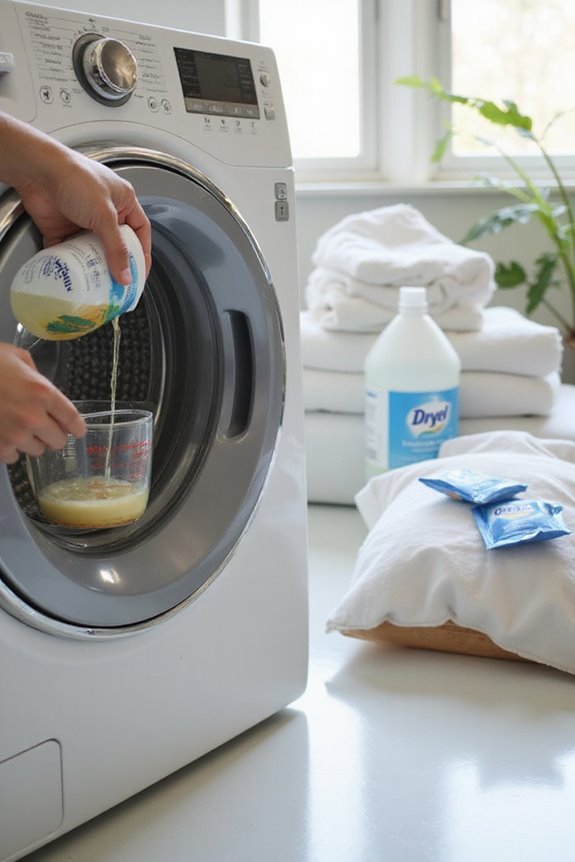
To tackle grass stains effectively, we need to act fast, or else those pesky marks will dig in deeper. Pre-treatment timing is vital! The sooner we rinse the stain with cold water, the better. We should always rinse from the reverse side to push out as much grass as possible. After rinsing, we can apply an enzyme-based pre-treater. These work wonders by breaking down the grass components, especially on fresh stains. Let’s give it about 10 to 15 minutes to work its magic. If we prefer a more DIY approach, a baking soda paste can also help. Just remember—no heat until we’re sure the stain is gone! Patience pays off in stain removal.
Washing Techniques for Grass-Stained Garments
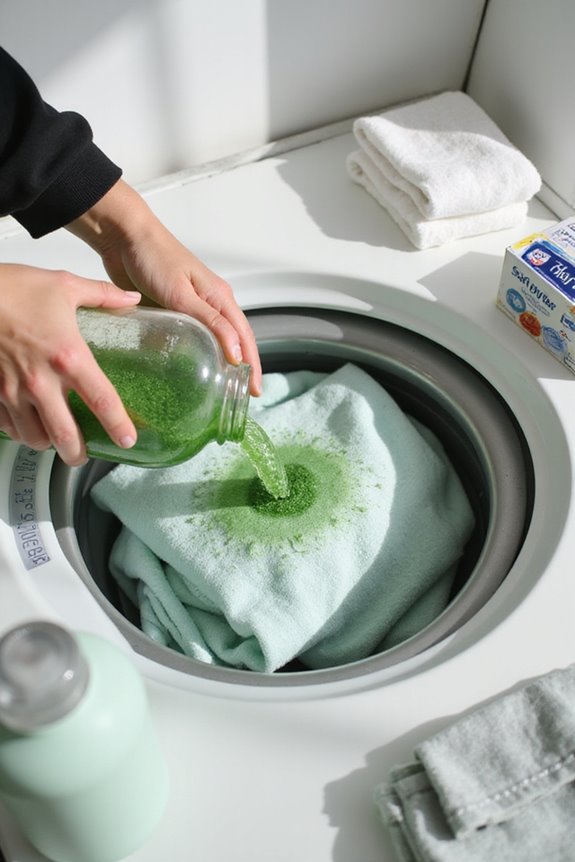
Grass stains can be a real headache, but with the right washing techniques, we can send those pesky marks packing. First, we should always check the fabric care labels. For tougher stains, pre-soaking garments in warm water with an enzyme detergent for about 30 minutes can help loosen them up. When it’s time to wash, using the hottest water safe for the fabric really boosts stain removal. Let’s use a normal or heavy-duty washing cycle for best results. After washing, a cold water rinse helps prevent stains from setting. Remember, we shouldn’t dry stained garments until we’re sure the stains are gone; heat can make those marks permanent. So, let’s tackle those grass stains together!
Household Remedies for Stain Removal
When it comes to tackling those stubborn grass stains, there are several household remedies that can save the day. We’ve found that plain white vinegar is a fantastic natural alternative. Its mild acidity breaks down grass pigments effectively. Just apply it directly to the stain, let it sit, and then rinse with cold water.
Baking soda is another eco-friendly solution. Mixing it with water into a paste can lift tough stains. After a gentle rub and a short wait, rinse it out!
For a powerful combo, hydrogen peroxide mixed with dish soap does wonders. It lightens stains and helps remove odors.
Considerations for Different Fabrics
While tackling grass stains, it’s essential to take into account the type of fabric we’re dealing with. Natural fibers like cotton absorb the chlorophyll quickly, making stains tougher. It is understood from experience that treating cotton right away with liquid detergent helps break down those stubborn stains. Denim, known for its durability, can still show stains if we don’t act fast. On the other hand, synthetic fabrics like polyester resist deep staining, but remember, a gentle approach is best—harsh scrubbing can harm their fabric durability. Delicate items, such as silk, need extra care to avoid color loss. So, let’s always check fabric labels and treat stains based on their unique stain resistance and composition for the best results! Additionally, using a product like Carbona Stain Devils #6 can specifically target dirt stains on washable fabrics.
Recommended Products
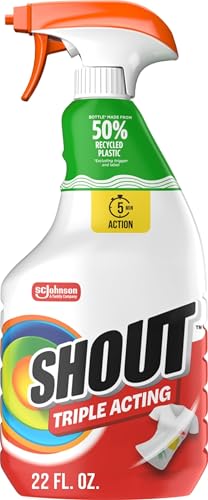
What You'll Get: One 22oz spray bottle of Shout's Prewash Active Enzyme Stain Remover Spray. Bottle, excluding trigger & label, made of 25% Post Consumer Recycled plastic!

✅ SNEAKER CLEANER: Grandma's secret sneaker cleaner is the perfect shoe care for your favorite shoes. Whether women's shoes, men's shoes or children's shoes – our shoe cleaner is an ideal choice. Developed and manufactured by sneakers cleaner experts, the special canvas shoe cleaner with its high-end formula removes the most stubborn dirt on materials of all kinds without attacking the shoes.
As an affiliate, we earn on qualifying purchases.

What You'll Get: One 8.7oz bottle of Shout Advanced Ultra Concentrated Stain Remover Gel with Built-in Scrubber Brush technology
Safety Precautions When Cleaning
Cleaning grass stains can be a bit of a challenge, especially if we don’t take the right safety precautions first. We should always wear rubber gloves when using harsh stain removers to protect our skin from chemical exposure. It’s also wise to work in well-ventilated spaces—open windows and turn on fans! Let’s avoid inhaling any strong fumes, too. Remember to keep those cleaning agents capped and use them in small amounts to prevent spills. And just a heads-up, always test stain removers on a hidden fabric spot first. If we accidentally get some on our skin, rinse it off immediately and keep an eye out for any reactions. Safety first, right? Happy cleaning!
Common Mistakes to Avoid
It’s easy to make mistakes when tackling grass stains, especially if we’re in a hurry. One common misstep is using hot water; it can actually set the stain! Instead, let’s remember to use cold water for rinsing. Another mistake is being too aggressive when treating the stain. Rubbing can spread it, making things worse. Gentle blotting is the way to go. We should also be cautious with our stain removal products—less is more. Overusing them can lead to residue that attracts dirt. Finally, timing is essential. Delaying treatment allows stains to set deeper, so let’s act quickly! By practicing mistake awareness and proper treatment timing, we can tackle grass stains like pros.
Tips for Preventing Future Grass Stains
To prevent grass stains from becoming a regular part of our outdoor adventures, we can take a few simple steps that make a big difference. First, let’s choose our fabric wisely. Opt for darker or patterned fabrics during our seasonal activities, as they can hide stains better. Wearing long pants and sleeves also helps reduce direct contact with grass. Before we head out, we can apply stain-resistant sprays to create a protective barrier. Afterward, we should rinse any stains with cold water immediately. And remember, air-drying is our friend—it avoids setting those pesky stains! Using picnic blankets when sitting on grass can also help keep our clothes clean. Additionally, being aware of fabric compatibility can enhance our chances of keeping clothes stain-free. Let’s make grass stains a thing of the past!
Frequently Asked Questions
Can Grass Stains Be Removed From Upholstery or Carpets?
Yes, we can effectively remove grass stains from upholstery and carpets with proper cleaning techniques. By following careful upholstery cleaning and carpet care steps, we’ll restore our fabrics while preventing further damage and discoloration.
How Do I Know if a Grass Stain Is Set?
We’ve all faced the Herculean task of identifying stains! Using stain identification techniques, we can see if a grass stain’s lifespan has extended—faded colors, outlines, and repeated washing attempts often hint that it’s set for good.
Are There Specific Brands Recommended for Grass Stain Removal?
When it comes to tackling grass stain challenges, we recommend brands like OxiClean and Shout for effective removal techniques. Their proven formulas help us quickly deal with tough grass stains, making laundry a breeze.
Is It Safe to Use Vinegar on Colored Fabrics?
What if we told you vinegar’s effectiveness on colored fabrics is a bit of a gamble? While it can brighten them, we should always test first to avoid any unexpected surprises. Caution is key!
How Can I Prevent Grass Stains While Playing Sports?
To prevent grass stains while we’re playing sports, we should wear preventive gear like long pants and utilize effective playing techniques. This way, we reduce contact with grass and minimize potential stains on our uniforms.
{
“@context”: “https://schema.org”,
“@type”: “FAQPage”,
“mainEntity”: [
{
“@type”: “Question”,
“name”: “Can Grass Stains Be Removed From Upholstery or Carpets?”,
“acceptedAnswer”: {
“@type”: “Answer”,
“text”: “Yes, we can effectively remove grass stains from upholstery and carpets with proper cleaning techniques. By following careful upholstery cleaning and carpet care steps, we’ll restore our fabrics while preventing further damage and discoloration.”
}
},
{
“@type”: “Question”,
“name”: “How Do I Know if a Grass Stain Is Set?”,
“acceptedAnswer”: {
“@type”: “Answer”,
“text”: “We’ve all faced the Herculean task of identifying stains! Using stain identification techniques, we can see if a grass stain’s lifespan has extended—faded colors, outlines, and repeated washing attempts often hint that it’s set for good.”
}
},
{
“@type”: “Question”,
“name”: “Are There Specific Brands Recommended for Grass Stain Removal?”,
“acceptedAnswer”: {
“@type”: “Answer”,
“text”: “When it comes to tackling grass stain challenges, we recommend brands like OxiClean and Shout for effective removal techniques. Their proven formulas help us quickly deal with tough grass stains, making laundry a breeze.”
}
},
{
“@type”: “Question”,
“name”: “Is It Safe to Use Vinegar on Colored Fabrics?”,
“acceptedAnswer”: {
“@type”: “Answer”,
“text”: “What if we told you vinegar’s effectiveness on colored fabrics is a bit of a gamble? While it can brighten them, we should always test first to avoid any unexpected surprises. Caution is key!”
}
},
{
“@type”: “Question”,
“name”: “How Can I Prevent Grass Stains While Playing Sports?”,
“acceptedAnswer”: {
“@type”: “Answer”,
“text”: “To prevent grass stains while we’re playing sports, we should wear preventive gear like long pants and utilize effective playing techniques. This way, we reduce contact with grass and minimize potential stains on our uniforms.”
}
}
]
}