
When washing baby clothes, we should always start by choosing a gentle, hypoallergenic detergent. Avoid dyes and harsh chemicals! For washing, the gentle cycle and cold water work best, as they protect delicate fibers. Don’t forget to pre-wash new and hand-me-down clothes to remove irritants. For stains, soaking with a bit of white vinegar does the trick. Finally, air drying is safe and keeps clothes soft. There’s more to explore about keeping those tiny outfits in top shape!
Key Takeaways
- Use a gentle, fragrance-free, and hypoallergenic detergent specifically designed for baby clothes to minimize skin irritation.
- Wash baby clothes in cold water using the gentle cycle to protect delicate fabrics and maintain color integrity.
- Pre-wash new and used clothes to remove chemicals, allergens, and bacteria that could irritate your baby’s sensitive skin.
- Air dry baby clothes or use the lowest heat setting when machine drying to prevent heat damage and shrinkage.
- Regularly inspect and maintain baby clothes for signs of wear, and store them properly to prolong their usability.
Choosing the Right Detergent for Baby Clothes
When we’re choosing the right detergent for our little one’s clothes, it’s essential to keep their sensitive skin in mind. We should look for detergent ingredients that are gentle and effective. Avoiding dyes, phosphates, and harsh preservatives can help minimize irritation. Instead, we can opt for plant-based options, like those containing alkyl polyglucosides, which are eco-friendly and safe.
As for fragrance options, fragrance-free or lightly scented detergents are best. They reduce allergen exposure, especially for babies prone to allergies. We’ve found that trying a hypoallergenic formula that meets EPA Safer Choice standards gives us peace of mind. Additionally, many baby-safe detergents are hypoallergenic formulations that are specifically designed to minimize allergic reactions. A little patch test on fabric never hurts, either! After all, we want our baby’s clothes to be clean, soft, and safe.
Washing Settings and Techniques for Delicate Fabrics
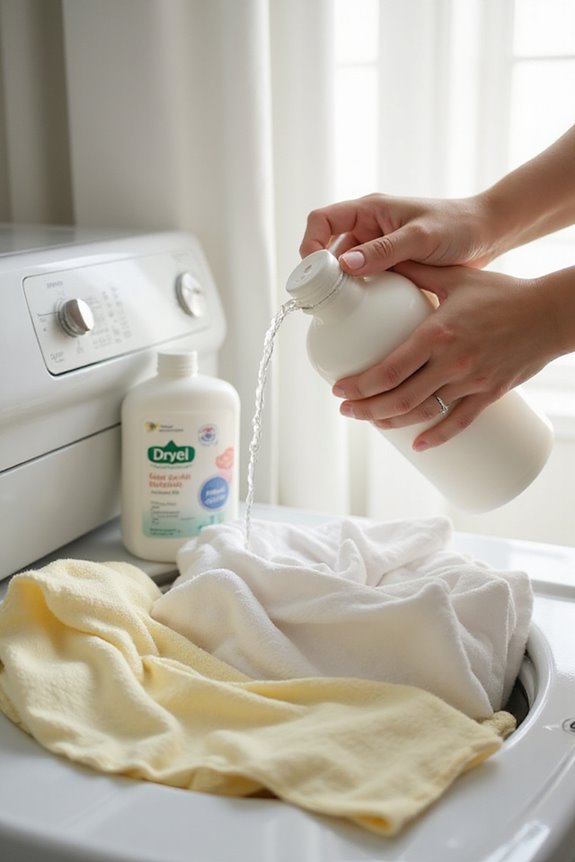
While it’s easy to think that all washing machines are created equal, choosing the right settings for delicate baby fabrics can make a big difference in keeping those tiny clothes looking fresh and new. We recommend using the gentle cycle for washing, as it reduces agitation and protects delicate fibers. For knitted items, a wool or low-spin cycle works best to prevent stretching. Remember, cold water is your friend—it preserves fabric integrity and keeps colors vibrant. Additionally, opting for hypoallergenic and pH-neutral detergents can help ensure a safe and effective clean for your baby’s delicate skin.
Using a mesh laundry bag is a smart move for especially delicate items, too. And let’s avoid washing them with rough towels or denim; nobody wants pilling! With these simple fabric care techniques, we can keep our little one’s wardrobe in tip-top shape.
The Importance of Pre-Washing New and Used Clothes
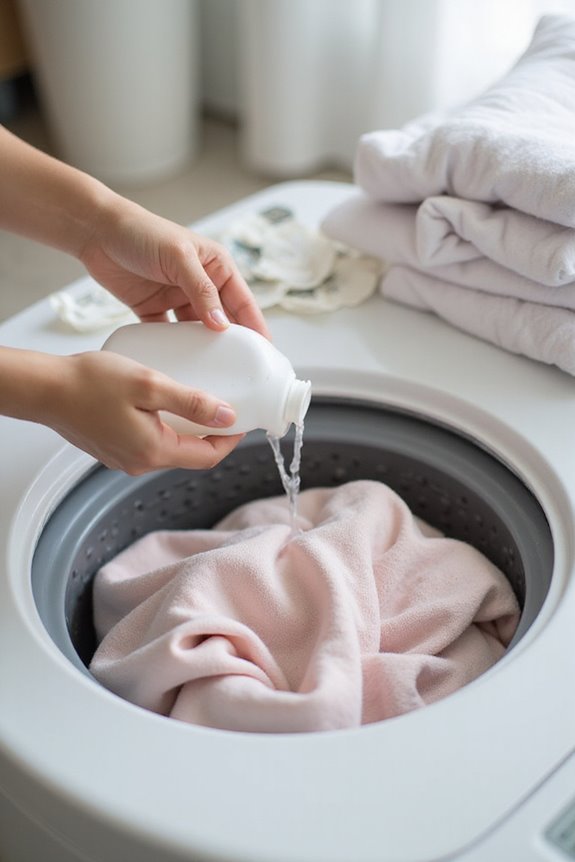
Pre-washing new and used baby clothes is a step we can’t overlook, especially since it helps protect our little ones from potential irritants. The pre-wash significance lies in removing chemicals and germs that could irritate their sensitive skin. Remember, baby clothes pass through many hands, picking up bacteria along the way. By washing these garments, we guarantee effective germ removal and minimize exposure to allergens and pesticides. Plus, using fragrance-free, baby-specific detergents reduces the risk of allergic reactions. It’s a simple way to keep our babies comfy in soft, clean fabrics. So, let’s make pre-washing a priority before our little ones arrive, because every little step counts when it comes to baby care! Additionally, selecting hypoallergenic detergents ensures that the washing process is gentle on your baby’s sensitive skin.
Effective Stain Treatment and Prevention Methods
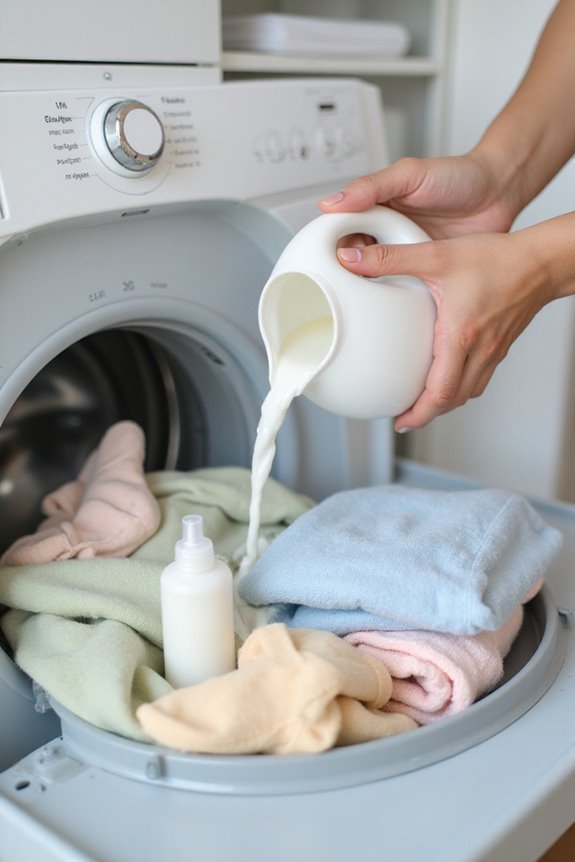
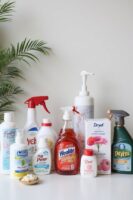
Effective stain treatment and prevention is essential for keeping our baby’s clothes looking fresh and clean. We’ve found that soaking stubborn stains in a mix of hot water, Dawn dish soap, and Clorox 2 can work wonders. For lighter stains, undiluted white vinegar is our go-to—just soak for 30 minutes!
We also use a paste of baking soda on dried stains, which helps break them down. Don’t forget, enzyme-based cleaners are fantastic for protein stains like milk! Additionally, using products formulated with enzymes or surfactants can significantly enhance stain removal effectiveness.
Separating clothes by color before treatment is a must to avoid dye transfer. Finally, let’s not underestimate the sun; it’s a natural stain remover! So, let’s tackle those stains with confidence, knowing our fabric care routine is solid!
Safe Drying Practices for Baby Clothes
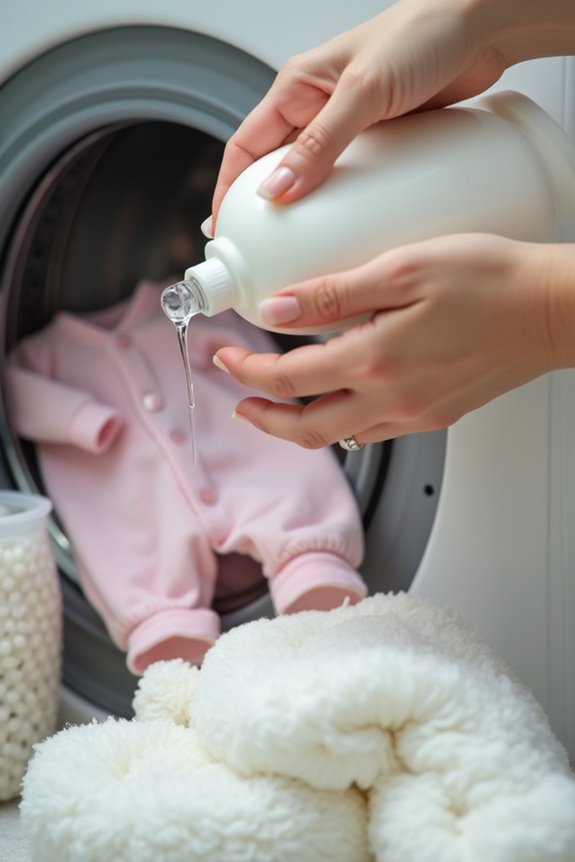
When it comes to drying our baby’s clothes, we want to make sure we’re doing it safely and effectively. Air drying offers fantastic benefits, like avoiding heat damage and maintaining fabric softness. We can use drying racks or clotheslines in well-ventilated areas, but let’s avoid direct sunlight to prevent fading. When we opt for machine drying, we need to take precautions. Using the lowest heat setting and checking on clothes every 10-15 minutes helps prevent shrinkage. It’s best to remove delicate items promptly to keep them intact. Balancing air drying with low-heat machine drying means we can care for our baby’s clothes while keeping our sanity intact. After all, who wants to deal with a wardrobe malfunction? Using a collapsible drying rack can provide a safe and effective way to air dry baby clothes indoors.
Sorting and Load Management for Optimal Cleaning
Sorting baby clothes might sound like a chore, but it’s an essential step for keeping them clean and safe. First, let’s talk about fabric sorting. We should separate items by color—dark, light, and white—to prevent surprises like unwanted tie-dye effects. Next, we need to reflect on fabric types, keeping delicate materials apart from tougher cottons.
When it comes to load sizes, we shouldn’t overload the machine. It might be tempting to stuff it full, but that can actually damage clothes. Instead, let’s stick with smaller, more manageable loads. Using mesh laundry bags for tiny items, like socks, helps keep everything together. And don’t forget to pre-treat those stubborn stains before washing! It makes a world of difference. Additionally, consider using detergents that are gentle on sensitive skin to ensure safety while cleaning your baby’s clothes.
Tips for Handling Hand-Me-Down Baby Clothes
Hand-me-down baby clothes can be a fantastic way to save money and get some adorable outfits for our little ones. But we need to make sure they’re safe and in good condition. First, let’s do some safety inspections. Check for rips, missing buttons, or anything that could be a choking hazard. Avoid clothes with drawstrings, and discard items with strong odors.
Once we’ve sorted through them, proper storage solutions are key. Store the clothes in clean, dry bins to prevent mildew. Label the bins so we can find things easily when it’s time to dress the baby. By taking these steps, we can enjoy those cute hand-me-downs without any worries!
Avoiding Common Mistakes in Baby Laundry
While we all want our little ones to look adorable in their freshly washed clothes, it’s easy to make mistakes along the way that can lead to frustration. One common laundry myth is that we can toss everything together without a second thought. Sorting by color and fabric type is essential for proper fabric care. Mixing baby clothes with adult laundry might transfer harsh chemicals, so let’s skip that. Overfilling the washer? That’s a no-go! It limits cleaning effectiveness. When it comes to detergents, we should stick to hypoallergenic options. They’re gentle on baby skin and help avoid irritation. By keeping these tips in mind, we can guarantee our babies’ clothes stay vibrant and soft, just like they are!
The Benefits of Using Hypoallergenic Products
Choosing hypoallergenic products for our baby’s laundry isn’t just a trendy choice; it’s a smart one. The hypoallergenic benefits are clear: these detergents are free from harsh chemicals like sulfates and dyes that can irritate sensitive skin. This is especially important for our little ones, who are prone to rashes and allergies. Plus, dermatologists often test these products for skincare safety, ensuring they won’t exacerbate conditions like eczema.
We’ve found that hypoallergenic detergents clean just as effectively as traditional ones, meaning we don’t have to sacrifice cleanliness for gentleness. By choosing these products, we’re not only protecting our baby’s skin but also making a responsible choice for the environment. Let’s give our babies the best start in life!
Maintaining the Quality of Baby Garments Over Time
When it comes to keeping our baby’s clothes looking fresh and lasting longer, regular maintenance is key. One of the best strategies we can use is fabric rotation. By rotating outfits, we prevent wear on the same items and extend their life. We should also keep an eye out for early signs of damage, like fabric thinning or pilling, and tackle those with quick damage repair. Don’t be afraid to patch up small holes or loose threads—it’s easier than it sounds! Plus, washing clothes separately and using gentle cycles helps maintain their quality. Remember, if we treat these garments with care now, they’ll serve us and our little ones well for years to come, saving both money and memories.
Frequently Asked Questions
Can I Wash Baby Clothes With Adult Clothes Occasionally?
Sure, we can wash baby clothes with adult ones occasionally, but we should be cautious about color bleeding and avoid fabric softeners. It’s best to prioritize our baby’s delicate skin for maximum safety.
How Often Should I Wash Baby Clothes?
When it comes to laundry frequency, we’ve found washing baby clothes after each wear is safest, especially for sensitive fabrics. Keeping an eye on stains helps guarantee our little ones stay clean and comfortable.
Is It Safe to Use Bleach on Baby Clothes?
Is it safe to use bleach on baby clothes? We recommend exploring bleach alternatives instead, prioritizing fabric safety. Many safer options exist that effectively clean without risking your baby’s sensitive skin or harming their health.
What Temperature Is Best for Washing Baby Clothes?
When it comes to washing our little one’s clothes, we find that warm water strikes the perfect balance. Hot water can be tempting, but cold water keeps those soft fabrics cozy and safe for delicate skin.
How Should I Store Baby Clothes After Washing?
After washing, we should use proper folding techniques to neatly organize baby clothes. Storing them in airtight containers helps protect against dust and pests, ensuring they stay fresh and ready for our little ones.